We examined the 45-page student edition and 63-page teacher notes for Secondary Math One, Module 2 (2016). The findings below highlight learning opportunities and the boundaries of what the evidence supports. This is a module review, not a whole-program score.
Lesson 2.1 · Representing change
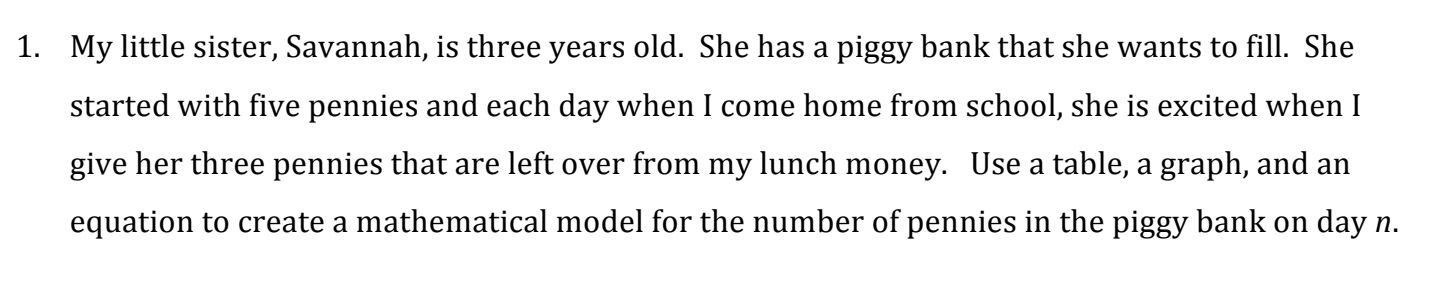
Connecting the Dots: Piggies and Pools
Students build tables, graphs and equations for supplied saving and pool contexts, then compare situations. This links arithmetic and geometric sequences to linear and exponential functions.
What this establishes. The situations, variables and requested representations are supplied. This is evidence of contextual model construction, not independent selection of every modeling assumption or tool.
Original source excerpt · Select image for a closer look.
Lesson 2.2 · Interpreting domains
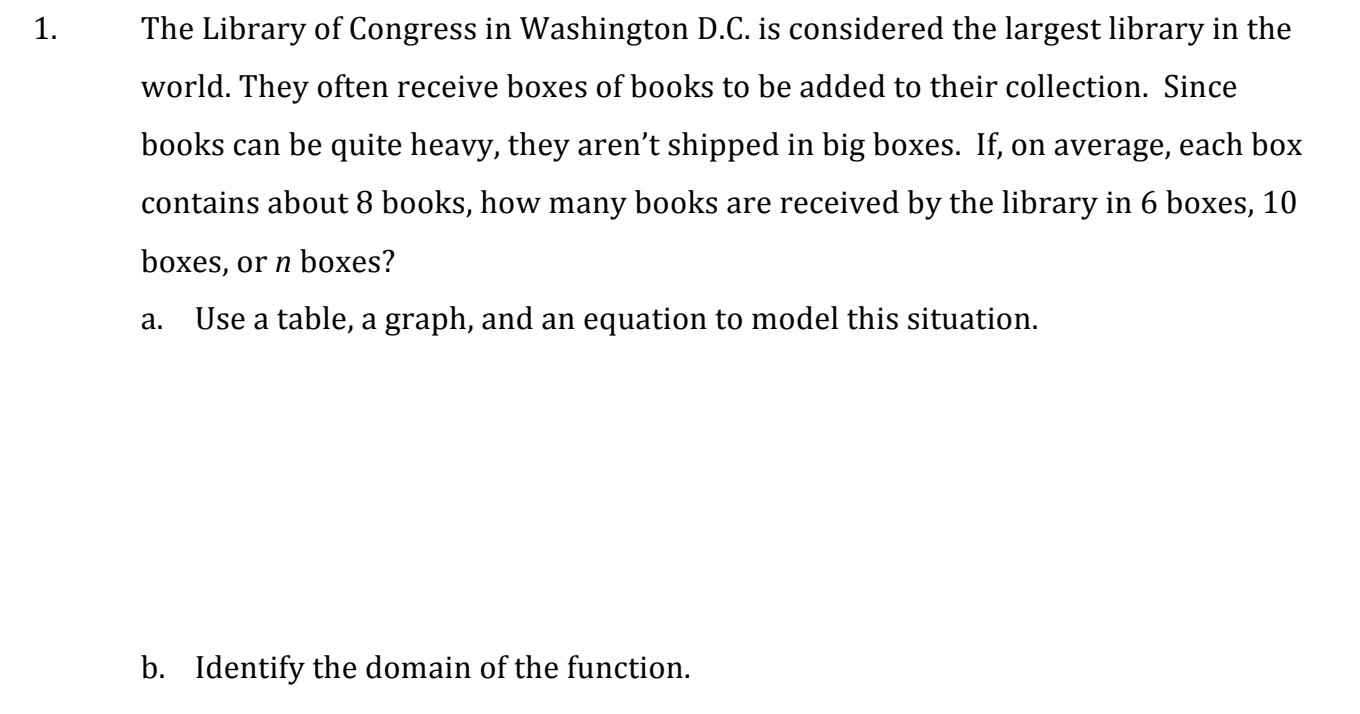
Shh! Please Be Discreet (Discrete)!
The books-in-boxes task asks students to represent the relationship and identify its domain. Teacher notes explicitly connect context with discrete or continuous models for linear and exponential change.
What this establishes. A correct formula alone does not establish that a student understands which inputs make sense. Domain explanations are an important part of the intended reasoning.
Original source excerpt · Select image for a closer look.
Lesson 2.3 · Explaining a classification
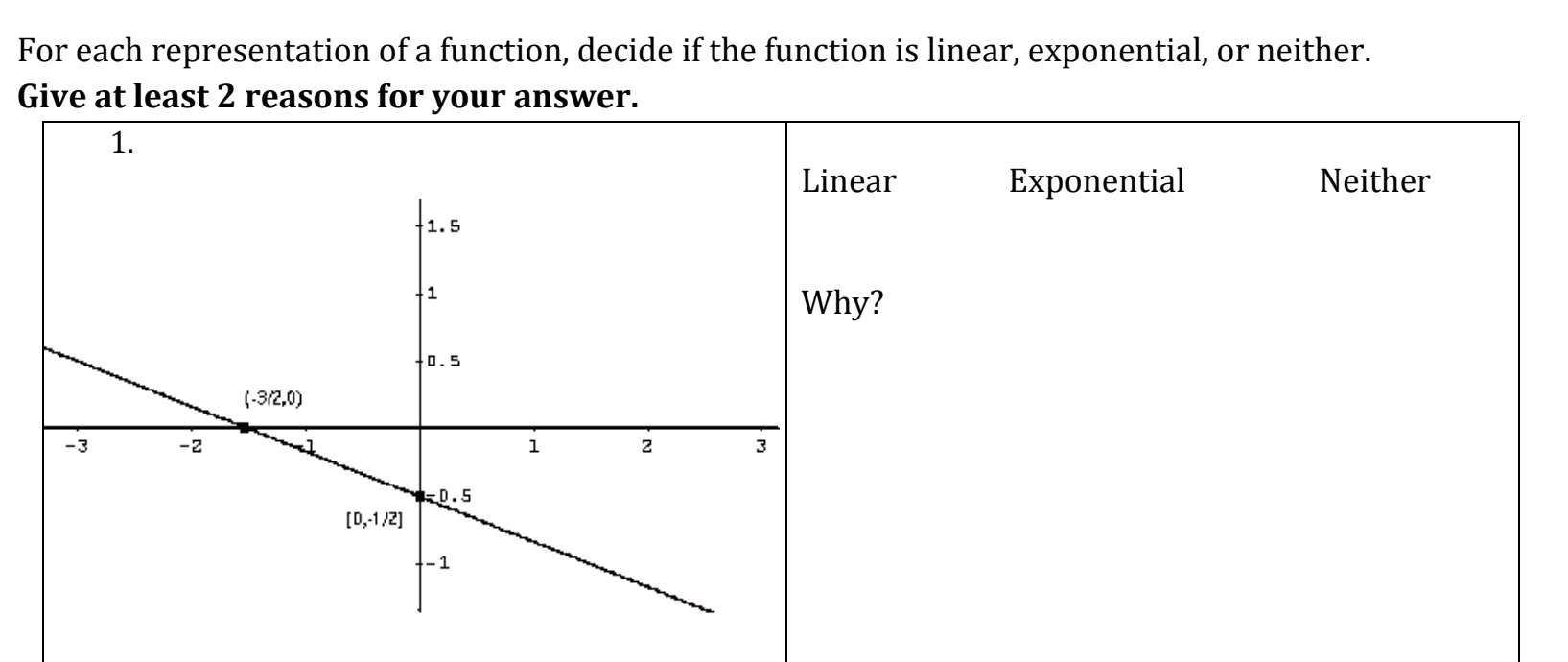
Linear, Exponential or Neither?
Students classify functions from different representations and give at least two reasons. The graph and table tasks make explanations part of the required response, rather than an optional extension.
What this establishes. This is evidence of a reasoning opportunity. It does not, by itself, establish that students construct full proofs or attain fluency across a course.
Original source excerpt · Select image for a closer look.
Lesson 2.4 · Comparing growth
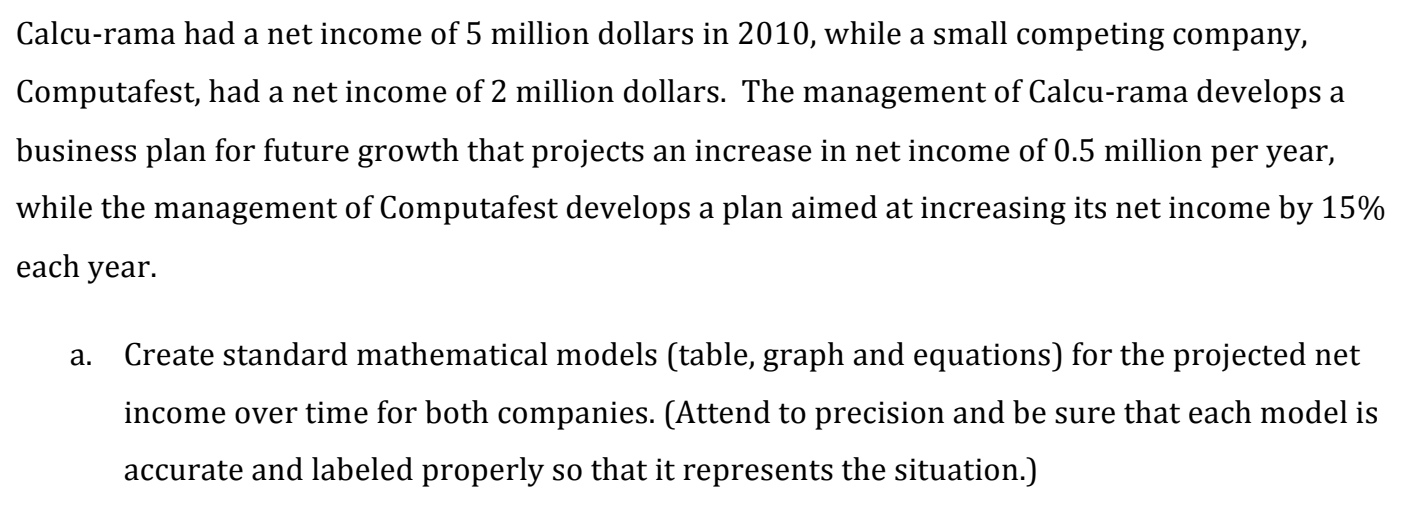
Getting Down to Business
Two companies begin with different incomes and follow additive and percentage growth plans. Students create representations and compare them; teacher notes extend the discussion to growth over larger inputs and graphing windows.
What this establishes. The growth plans and starting values are supplied. Technology is recommended in the teacher notes; this recommendation alone is not evidence that students independently choose a tool.
Original source excerpt · Select image for a closer look.
Lesson 2.5 · Connecting forms and checking work
Making My Point
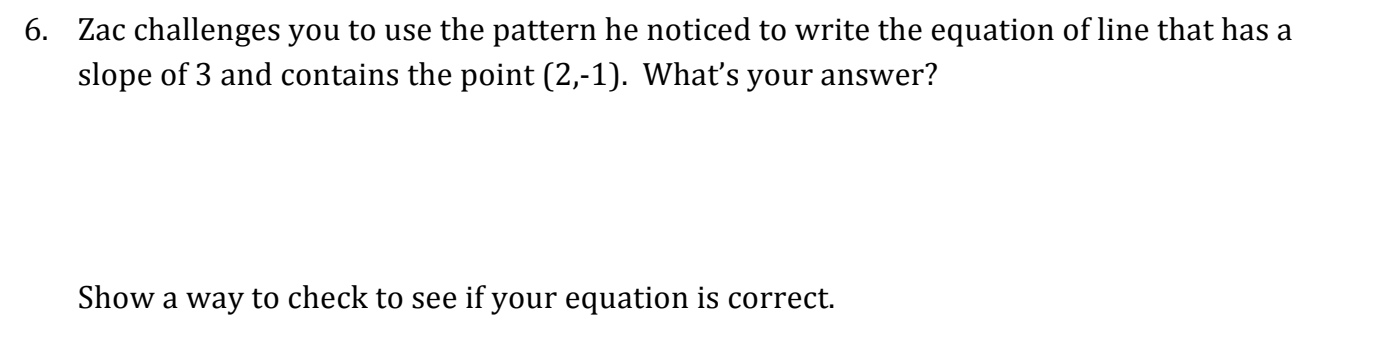
The lesson develops equivalent expressions and point-slope reasoning. In question 6, students write an equation from a slope and a point, then show a way to check it. Teacher guidance connects the work to alternative forms.
What this establishes. The shown question supplies the slope and point. The check is required, but no particular checking strategy is prescribed in this excerpt. Reference-label corrections are noted separately below.
Original source excerpt · Select image for a closer look.
Lesson 2.6 · Choosing and explaining an equation form
Form Follows Function
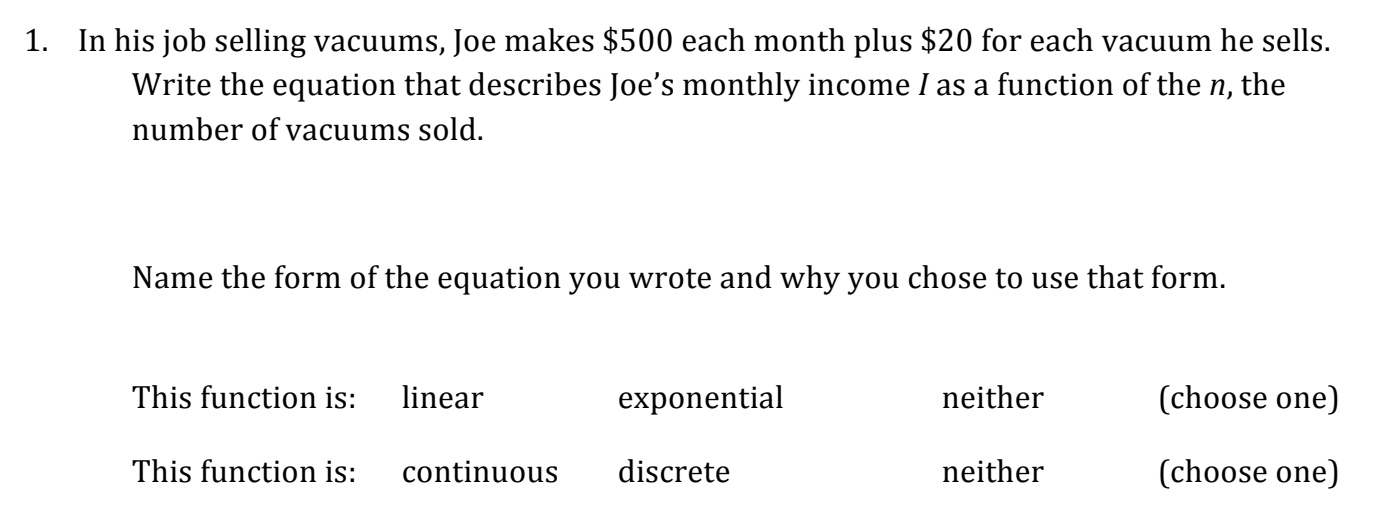
The task asks students to write an equation, name its form and explain why they chose that form. It also asks them to distinguish linear or exponential behavior and discrete or continuous inputs.
What this establishes. This provides explicit evidence of a representation-choice prompt. Choosing an equation form should not automatically be reported as choosing among calculators, spreadsheets or other tools.
Original source excerpt · Select image for a closer look.
Reference checks
Small labels. Meaningful corrections.
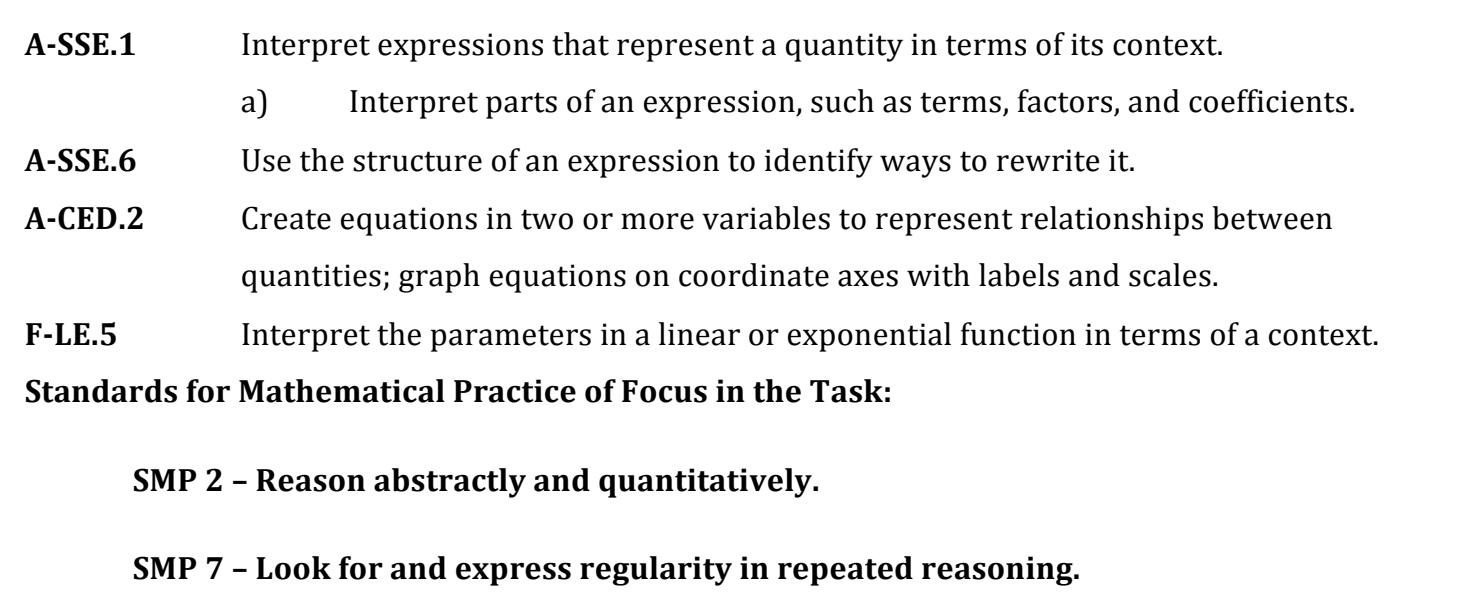
The teacher notes on PDF page 47 label an expression-structure expectation as A-SSE.6; the official Common Core reference is HSA.SSE.A.2. The same page labels repeated reasoning as SMP 7; the correct practice number is MP8. The source excerpt preserves the original wording.
All 108 source pages were accounted for. This public report presents selected findings and checked excerpts. It does not establish student mastery, whole-course assessment alignment or classroom effectiveness.